Exterior colour is the one design decision that every neighbour sees and that you will live with for a decade. In Brisbane it is also a technical decision, because UV load, heat absorption and the local architectural character all constrain what actually works.
Here is what is working across Brisbane suburbs in 2026, organised by the kind of street you are painting on.
The Big Shift: Warm Neutrals Have Replaced Cool Greys
The dominant story of the past two years is the retreat from cool grey. The Dulux Lexicon and Tranquil Retreat era peaked around 2021 and now reads as dated on newer streets.
What has replaced it is a warmer, more grounded neutral family — greige, mushroom, warm stone and soft clay tones. These sit far better against Brisbane's strong natural light, which is warmer than southern-state light and makes cool greys look flat and slightly blue.
Popular in 2026: Dulux Terrace White, Dulux Milton Moon, Dulux Ecru, Dulux Dieskau for a deeper option, and Dulux Domino for trim and accents.
Heritage and Character Streets
On the character-protected streets of Highgate Hill, West End, Paddington and much of Moorooka, the convention is a three-colour scheme: body, trim and feature.
Federation and interwar Queenslanders are looking best in 2026 with muted, historically sympathetic bodies — sage green, heritage blue-grey, soft ochre, deep cream
Popular combinations we are applying:
- Body **Dulux Ironstone**, trim **Dulux Vivid White**, door **Dulux Deep Bronze Green**
- Body **Dulux Colorbond Windspray**, trim **Dulux Natural White**, door in a deep oxblood
- Body **Dulux Half Duck Egg Blue**, trim **Dulux White on White**, fretwork picked out in the trim colour
If the property sits in a Brisbane City Council traditional building character overlay, exterior colour is usually not itself regulated, but the extent of alteration can be. Our council guidelines article explains where the lines fall.
Contemporary and Renovated Homes
On renovated and new stock through Camp Hill, Coorparoo, Bulimba and Newmarket, the strong 2026 look is monochrome with texture contrast.
A single warm neutral across walls and trim, with contrast delivered by material rather than colour — timber battens, black window frames, a stained front door, or a darker garage door. It photographs extremely well and it ages far better than a busy multi-colour scheme.
**Dark exteriors need a caveat in Brisbane.** Charcoal and near-black facades look sharp but absorb enormous heat load. On a west-facing wall a dark colour can push surface temperatures past 70 degrees, which accelerates thermal movement, stresses substrates and drives up cooling costs. If you want a dark scheme, use a solar-reflective formulation and reserve the darkest tones for south and east elevations or for trim rather than full walls.
Premium Western Suburbs
Through Indooroopilly, Toowong, Ashgrove and Bardon, the trend is toward textured and specialist finishes rather than new colours — limewash effects on render, sand-texture coatings, and multi-tonal schemes that emphasise architectural massing.
These finishes cost more to apply and require experienced application, but on a larger home they read as considered rather than default.
Bayside and Riverside
Near the water in Wynnum and along the river reaches, lighter is genuinely better — not just aesthetically but technically. Light colours run cooler, and in salt-affected air they show early corrosion staining sooner, which means you catch steel problems before they become structural.
Soft whites, pale sands, and chalky blue-greens with white trim remain the strongest look, and they will not date.
Practical Rules Before You Commit
1. **Always sample on the actual wall.** Paint an A2-sized patch on at least two elevations and look at it at 8am, noon and 5pm. Brisbane light changes colour perception dramatically across the day.
2. **Check the roof first.** The roof is usually the largest single colour on the building and it is the one you are least likely to change. Choose the wall colour to suit it.
3. **Consider the street, not just the house.** A colour that fights every neighbouring facade hurts resale even if you love it.
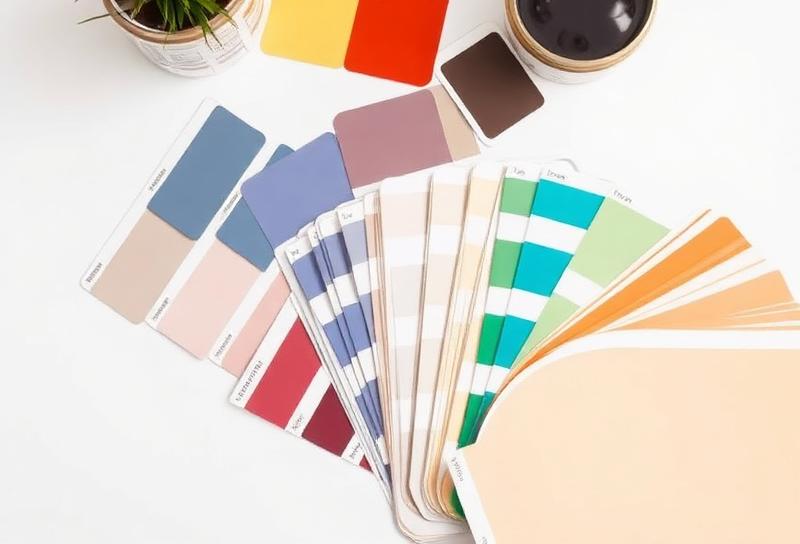
4. **Go one strength lighter than you think.** Exterior colours read considerably darker at full scale in bright sunlight than they do on a chip.
5. **Factor in fade.** Deep reds, bright blues and strong yellows use organic pigments that fade fastest under Queensland UV. Earth-based pigments hold their colour far longer.
Get Colour Advice On Site
We offer colour consultation as part of our exterior quoting process, including sample application on your own walls before you commit. Book a free inspection and we will bring options that suit your architecture, your street and Brisbane's light.