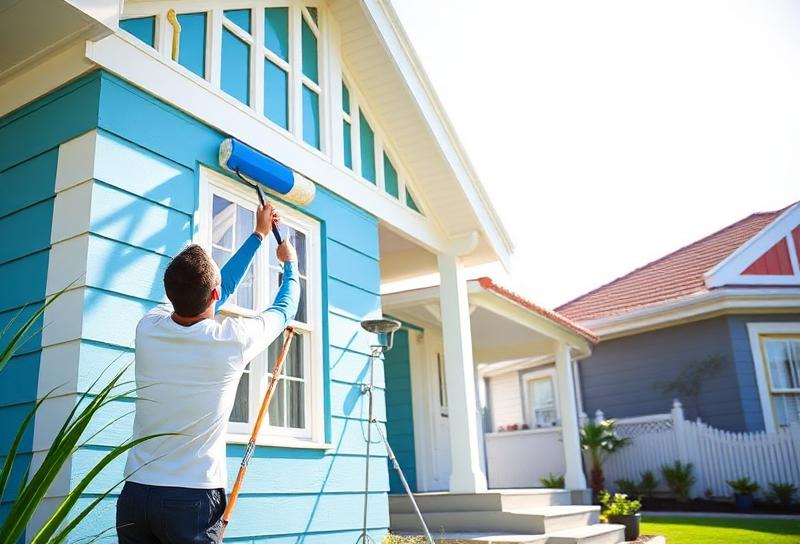
The south side of Brisbane is timber country. From Moorooka and Annerley through Yeronga, Salisbury, Tarragindi and Holland Park, the dominant housing stock is weatherboard and chamferboard homes built between the 1920s and 1950s, most of them raised on stumps.
Timber is a superb material in this climate when it is protected. Left alone, it fails faster here than almost anywhere else in the country. This is the maintenance plan we recommend to southside owners.
What Actually Attacks Timber in Brisbane
**Moisture cycling.** Timber swells when it absorbs moisture and shrinks as it dries. Brisbane delivers this cycle hard and often. Paint film that cannot flex with the movement cracks, and once it cracks water gets into the board rather than off it.
**Ultraviolet degradation.** UV breaks down lignin in exposed timber within weeks. Unprotected timber greys, the surface fibres separate, and the board loses its ability to hold a coating.
**Fungal decay.** Timber above about 20 per cent moisture content supports rot fungi. The classic locations are the bottom weatherboard course, window sills, the base of verandah posts and anywhere gutters overflow.
**Termites.** South East Queensland has among the highest termite pressure in Australia. Paint does nothing to prevent termites, but maintaining clear inspection access to your subfloor and stumps is essential to catching them.
The Weak Points, In Order
On a southside timber home, damage concentrates in predictable places. Inspect these first:
1. **Bottom weatherboard course** — closest to ground moisture and splash-back. The most common rot location on any Brisbane timber home.
2. **Window sills and lower sashes** — water pools on horizontal surfaces and perished putty lets it into the joinery.
3. **Verandah post bases** — end grain in contact with a wet deck surface wicks moisture upward.
4. **Fascia and barge boards** — behind overflowing or blocked gutters.
5. **Deck bearers and joists** — shaded, poorly ventilated and rarely inspected.
6. **Under-house stumps and bearers** — where drainage is poor and airflow is restricted.
Correct Preparation for Timber
Preparation is where timber repaints are won or lost.
- **Wash and treat.** Pressure clean at moderate pressure, then apply a dedicated mould and lichen treatment. High pressure at close range will shred soft old timber.
- **Scrape and sand flaking film.** On pre-1970 homes this must be done under lead-safe controls with containment and wet methods or HEPA extraction.
- **Cut out and replace rotted sections.** Filler is for small defects only. Structural rot needs the board replaced in a matching profile.
- **Prime all bare timber the same day it is exposed.** Bare timber left overnight in Brisbane humidity absorbs moisture and the coating fails early.
- **Seal end grain thoroughly.** End grain absorbs water at many times the rate of the face. Every cut, every board end and every post base needs sealing.
- **Caulk moving joints** with a flexible exterior sealant, not a rigid filler.
Our article on why surface preparation matters explains this in more detail.
Choosing the Right Coating
Weatherboards and cladding — Flexible exterior acrylic over an appropriate primer. Two full topcoats. Expect 7 to 10 years, shorter on the western elevation.
Trim, doors and window joinery — Water-based enamel in satin or semi-gloss. It flexes with the timber and will not yellow.
Decks and exposed horizontal timber — Do not use film-forming paint. Foot traffic and water pooling will crack it and once water is under the film it cannot dry out. Use a penetrating oil or stain, recoated every 2 to 3 years. See our [deck staining cost guide](/deck-staining-costs-brisbane).
Handrails and balustrades — Oil or enamel depending on whether the timber is exposed to sun overhead. Recoat more often than the walls; they take the most direct UV and hand contact.
Subfloor timbers — Keep them coated and, more importantly, keep them ventilated and dry.
A Southside Maintenance Schedule
- **Twice a year** — Wash down the south and shaded walls to prevent mould establishing.
- **Before storm season, every year** — Clear gutters and downpipes, check that stormwater discharges away from stumps, and inspect the bottom board course.
- **Every 2 to 3 years** — Re-oil decks, stairs and handrails.
- **Every 3 to 5 years** — Touch up any localised paint failure on north and west elevations before it spreads.
- **Every year** — Professional termite inspection, and keep the subfloor clear so an inspection is actually possible.
- **Every 7 to 10 years** — Full exterior repaint.
The economics strongly favour this schedule. Replacing rotted weatherboards and repairing structural timber costs several times what maintaining sound paintwork costs.
Ventilation Matters As Much As Paint
One thing many southside owners get wrong is enclosing the under-house area without adding ventilation. A raised Queenslander was designed to dry out through airflow beneath the floor. Close it in with solid walls, no vents and poor drainage, and you create ideal conditions for both rot and termites in the very timbers holding the house up. If you are converting an under-house area, get the ventilation and drainage designed properly first.
Book a Timber Assessment
Tier 1 Painting specialises in Brisbane timber homes, including full weatherboard restoration, rot repair and heritage work. Explore our timber restoration service, or book a free site inspection and we will give you an honest condition report before you spend anything.