Boundary Street in West End is one of the busiest mixed-use retail strips in Brisbane. Cafes, bars, boutiques, professional suites and residential apartments all share the same frontages, and the exterior of a building is doing marketing work every hour it is visible.
Commercial exterior maintenance in a high-traffic district is a different discipline to residential repainting. Here is what property managers and business owners need to plan for.
Why High-Traffic Frontages Degrade Faster
A retail frontage on a busy strip absorbs punishment a suburban house never sees:
- **Physical contact.** Bags, bikes, furniture, delivery trolleys and foot traffic scuff the lower two metres of every wall and column.
- **Vehicle pollutants.** Exhaust particulate and road grime bond to paint film and hold moisture against the surface.
- **Graffiti and stickers.** Removal solvents strip unprotected coatings along with the tag.
- **Cleaning regimes.** Frequent pressure washing wears standard acrylic films noticeably faster.
The practical result is that a commercial frontage typically needs attention on a 5 to 7 year cycle where an equivalent residential wall would run 10.
Specifying Coatings for Commercial Frontages
**Anti-graffiti systems.** A sacrificial or permanent anti-graffiti clear coat over the finish colour lets tags be removed without damaging the paint underneath. On heavily targeted frontages this pays for itself within two removal events.
**High-wash-resistance acrylics.** Products rated for repeated cleaning hold their sheen and colour through a weekly wash-down regime.
**Two-pack systems on high-contact metalwork.** Shopfront frames, security grilles, awning posts and bollards should be two-pack rather than standard enamel.
**Elastomeric membranes on rendered facades.** Many West End buildings are older rendered masonry with existing hairline cracking. A membrane bridges those cracks and prevents water ingress into the render.
**Heat-reflective coatings on awnings and roofing.** Meaningful for tenant comfort and running costs on hospitality tenancies.
Scheduling Around Trading Hours
The biggest planning issue on a busy strip is not the paint — it is keeping the tenancy trading.
We plan commercial exterior works around three constraints:
**After-hours and overnight works.** Frontages, awnings and entry surrounds are best done outside trading. Water-based low-odour systems make overnight work viable without disrupting neighbouring residential apartments.
**Staged zones.** Splitting a facade into sections so only part of the frontage is hoarded at any time keeps entries clear and signage visible.
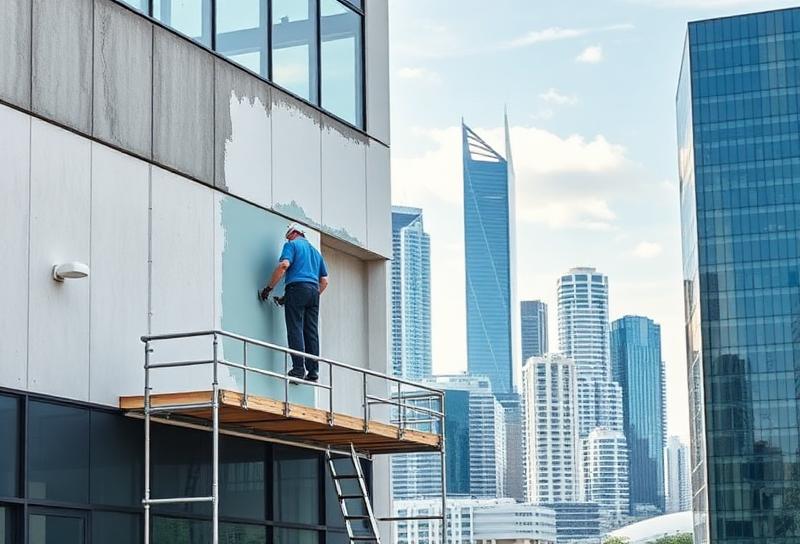
**Footpath permits.** Any scaffold, hoarding or work platform on a Brisbane City Council footpath needs a permit, and lead times need to be built into the program. We handle the application as part of the job.
Compliance and Site Requirements
Commercial work in an occupied precinct carries obligations residential work does not:
- Public liability insurance appropriate to the site value, with certificates provided to the property manager before mobilisation
- Site-specific SWMS covering public interface, working at heights and traffic management
- QBCC licensing appropriate to the contract value
- Pedestrian protection — hoardings, barriers and signage maintained for the duration
- Waste and washout containment to avoid stormwater contamination
For pre-1990 buildings, lead paint management is a live issue on any strip with older stock, and it must be handled under a controlled process.
Budgeting a Commercial Exterior Program
Commercial exterior work is quoted per square metre with access, permits and out-of-hours loading itemised separately. As a planning guide:
- **Single-tenancy shopfront refresh** — typically $3,500 to $9,000 depending on frontage width and detail
- **Full facade repaint, two to three storeys** — driven mainly by access method; scaffold and EWP hire is often 20 to 30 per cent of the total
- **Anti-graffiti clear coat** — adds roughly 15 to 20 per cent to the coated area but sharply reduces recurring removal cost
- **Out-of-hours works** — expect a labour loading, offset against the revenue protected by staying open
Our commercial painting service page sets out inclusions in detail, and the residential vs commercial comparison explains where the two differ.
Maintenance Beats Repainting
The cheapest commercial exterior program is a planned one. An annual inspection with localised touch-ups on the high-contact zones — entry surrounds, column bases, bollards and door frames — will extend a full repaint cycle by two to three years on most frontages.
We offer scheduled maintenance agreements for commercial and strata clients across West End, Highgate Hill, Kangaroo Point and the Brisbane CBD.
Get a Commercial Assessment
Tier 1 Painting is QBCC licensed, fully insured and experienced in occupied commercial and mixed-use precincts. Request a site assessment and we will provide a staged program, a fixed written quote and a works schedule that keeps your tenancies trading.